Choosing an underground drainage system involves more than selecting a pipe that fits the trench. The pipe material, stiffness, fittings, fall, bedding and destination of the water all affect whether the installation will work reliably and meet the relevant requirements. This guide explains the practical choices for UK projects, from a domestic foul drain to a surface water run beneath a driveway.
Building regulations and sewer ownership can vary by nation and by site. Approved Document H applies to England. Wales, Scotland and Northern Ireland have their own regulatory arrangements, so confirm the rules with the relevant building standards authority and water or sewerage company before work begins.
Choosing a pipe system
PVC-U solid wall pipe
PVC-U, or unplasticised polyvinyl chloride, is the familiar orange or brown solid wall plastic drainage pipe used for many domestic underground gravity systems. It is light to handle, resistant to corrosion and available with compatible bends, junctions and access fittings for foul drainage and surface water runs where the product is specified for the intended application and installed to its instructions.
For solid wall PVC-U systems, check whether the product conforms to BS EN 1401-1, which sets requirements for pipes, fittings and joints for non-pressure underground drainage and sewerage. The standard covers buried systems outside building structures. Verify the current edition and any amendments through the manufacturer or standards catalogue, since standard references can be revised.
Structured wall and twinwall pipe
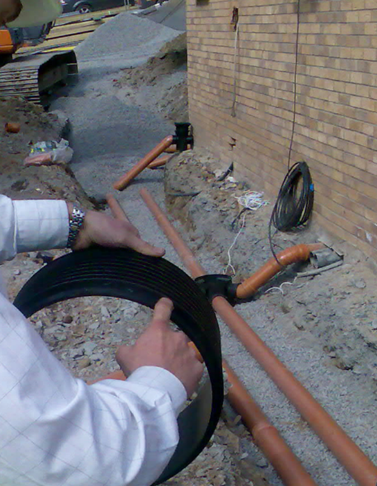
Structured wall pipe has a profiled exterior and a smooth bore. Twinwall drainage pipe is a common type, often supplied in larger diameters for surface water collection, attenuation, culverts or other designed drainage uses. Its corrugated outer wall can provide stiffness with less material than a solid wall of similar diameter, while the inner surface supports flow.
Many structured wall systems are specified to the BS EN 13476 series, which covers non-pressure underground drainage and sewerage systems made from PVC-U, polypropylene or polyethylene. Check the specific part and pipe type stated by the manufacturer. A structured wall pipe is not automatically interchangeable with solid wall drainage. Confirm that fittings, seals, stiffness class, diameter and intended application all match as a system.
Separate the water by purpose
Foul water carries wastewater from toilets, sinks, baths, showers and appliances. Surface water comes from roofs, yards and paved areas. The systems may use similar plastic materials, yet they have different design destinations. Foul water normally goes to a foul sewer or an approved private treatment system such as a septic tank or sewage treatment plant. Surface water should be managed through an appropriate surface water sewer, soakaway crate system or other lawful arrangement, depending on local conditions and approvals.
Keep foul and surface water flows separate unless the relevant sewerage company or approved design specifically allows a combined system. A wrong connection can cause pollution, surcharge or flooding. Before choosing fittings, establish where each run discharges and obtain any necessary permission for a connection.
Read the specification before buying
A familiar colour or nominal diameter does not prove a pipe is suitable. Check the product marking, technical data sheet and installation guide. Confirm the standard, material, outside diameter, ring stiffness class where stated, joint type, seal specification and intended use. Check that bends, branches, access chambers and connectors are made for the same system or are explicitly approved as compatible.
For PVC-U solid wall pipe, BS EN 1401-1 is the key reference for non-pressure underground drainage and sewerage. Structured wall products may use the BS EN 13476 series. Other standards can apply to pressure systems, internal above-ground soil and waste pipework, or particular applications, so do not transfer one standard reference to every plastic pipe on site.
The standard is only one part of the decision. Installation depth, ground conditions, traffic loading and manufacturer guidance all matter. A product selected for a garden run may not be appropriate beneath a frequently trafficked area without a suitable design and a driveway-rated cover and frame. When a drain will be adopted by a sewerage company, check its current design and construction requirements as well as the product literature.
Installation details that make the difference
Set the line and gradient
Plan the route before digging. Use a consistent fall toward the outlet, avoid unnecessary changes of direction and check levels throughout the run. Approved Document H includes guidance on minimum gradients for common foul drainage arrangements, with the appropriate value depending on pipe size and flow. For example, a 100 mm drain serving a WC is commonly designed around a gradient of 1 in 80 under the relevant guidance, while lower flows and other pipe sizes can require different falls. Treat this as a design check, not a universal figure. Confirm the precise situation against the current guidance and the drainage layout.
A slope that is too shallow can leave solids behind. An excessively steep run can allow liquid to move ahead of solids in some configurations. Accurate levels, appropriate pipe sizing and a well planned layout are more dependable than relying on a rough visual estimate.
Prepare bedding and side support
Flexible plastic pipes rely on the surrounding ground and granular bedding for support. Excavate a trench wide enough to install and compact the specified bedding and sidefill. Remove sharp stones and soft spots, form an even bed, then place and compact suitable material around the pipe haunches and sides in line with the design and manufacturer instructions. A non-woven geotextile membrane can help separate bedding material from surrounding ground where filtration is needed. Backfill in layers and avoid displacing or crushing the pipe.
The required material and cover depend on pipe diameter, depth, soil and loading. Standards such as BS EN 1610 address construction and testing of drains and sewers, while design guidance and product instructions help determine the appropriate installation detail. Avoid assuming one bedding recipe suits every trench.
Make joints carefully
Cut pipe square, remove burrs and clean the spigot and socket. Use a specified jointing lubricant on elastomeric seals, and insert the pipe to the manufacturer’s insertion mark or specified allowance. Keep seal faces clean and correctly seated. A joint that is twisted, contaminated or forced together can leak or create a snag inside the bore. Use compatible fittings, and check the completed run with a drain air test kit for line, level and secure connections before covering it.
Provide access for inspection and clearing
Access points let a drainage professional inspect and clear the system. Provide suitable rodding eye access points at changes of direction, junctions and other points required by the layout and applicable guidance. Inspection chambers or manholes should be positioned so the route can be maintained without dismantling pipework. Keep lids accessible after landscaping or paving, and select covers suited to their location and expected loading.
Protect drains beneath traffic areas
A driveway changes the load imposed on a buried pipe. The pipe’s stiffness, depth of cover, bedding and compacted backfill act together, so a stronger pipe alone does not guarantee a safe installation. Follow the manufacturer’s cover and loading guidance, and obtain a project specific design where the route is shallow, heavily trafficked or close to foundations. Use an appropriate heavy duty cover and frame over chambers in trafficked locations. Do not drive plant or vehicles over an unfinished trench.
Approved Document H and permissions
Approved Document H gives practical guidance for meeting Part H of the Building Regulations in England. It addresses foul water drainage, rainwater drainage, building over or near drains, wastewater treatment and related matters. Following its guidance can help demonstrate compliance, though a building project may use a different solution where it meets the regulation’s functional requirements and is accepted by building control.
Check with building control before work if a new drain, alteration or extension affects the drainage arrangements. A connection to a public sewer may require the sewerage company’s approval. Building over or near a public sewer can also trigger consent requirements and constraints. Requirements differ across the UK, so use the correct national regulations and contact the relevant authority for the site.
A private drain is generally the drain serving a property before it connects to a public sewer. In England and Wales, qualifying shared sewers and lateral drains were transferred to sewerage companies in 2011, with the exact responsibility depending on location and network details. Owners generally remain responsible for private drains within their property boundary that serve only their property. A property can still have a public sewer running through it, so a boundary line alone may not settle every case. Ask the local sewerage company to confirm ownership and responsibilities before repairing, diverting or building near a drain.
When to call a drainage professional
Bring in a drainage designer or qualified contractor where levels are constrained, the route passes beneath a road or heavily used driveway, the ground is unstable, flooding has occurred, or the work involves a connection to a public sewer. Professional advice is also sensible for shared drainage, a septic tank or package treatment system, or any proposal close to foundations or a public sewer. Contact building control or the sewerage company early when permissions may be needed. Early checks can prevent expensive excavation and rework.
Frequently Asked Questions
Is PVC-U suitable for underground foul drainage
It is commonly used for non-pressure underground foul drainage pipe when the pipe and fittings are specified for that purpose, comply with the relevant product standard and are installed to the manufacturer’s instructions. Confirm the application and system compatibility before purchase.
What does BS EN 1401 cover
BS EN 1401-1 specifies requirements for solid wall PVC-U pipes, fittings and joints used in non-pressure underground drainage and sewerage. Check the current edition and product documentation when specifying a system.
Can foul water and rainwater share one plastic pipe
They should be designed as separate systems unless the approved arrangement and sewerage company requirements allow a combined system. Establish the correct destination for each flow before connecting any pipework.
Who repairs a drain on my property
Owners usually maintain private drains serving only their property, while qualifying shared sewers and lateral drains in England and Wales are generally the responsibility of the sewerage company following the 2011 transfer. Network history and site layout can affect the answer, so ask the company to confirm ownership.
Do I need approval before connecting to a public sewer
A connection or work near a public sewer may require approval from the sewerage company, and building work may also need building control involvement. Confirm permissions before starting, and check the regulations that apply in your part of the UK.
Choose carefully, install confidently
A dependable plastic drainage system begins with the right pipe for the job, a clear understanding of where the water must go and a specification that matches the installation conditions. Verify product standards, keep foul and surface water arrangements clear, set the fall accurately, support the pipe properly with appropriate underground drainage pipe and fittings and provide access for future maintenance. Beneath a driveway or near a public sewer, seek project specific advice before work starts.
Before ordering materials or opening a trench, check the current guidance with building control, the relevant sewerage company and the pipe manufacturer. A short planning conversation now can protect the system for years and help keep the project compliant.